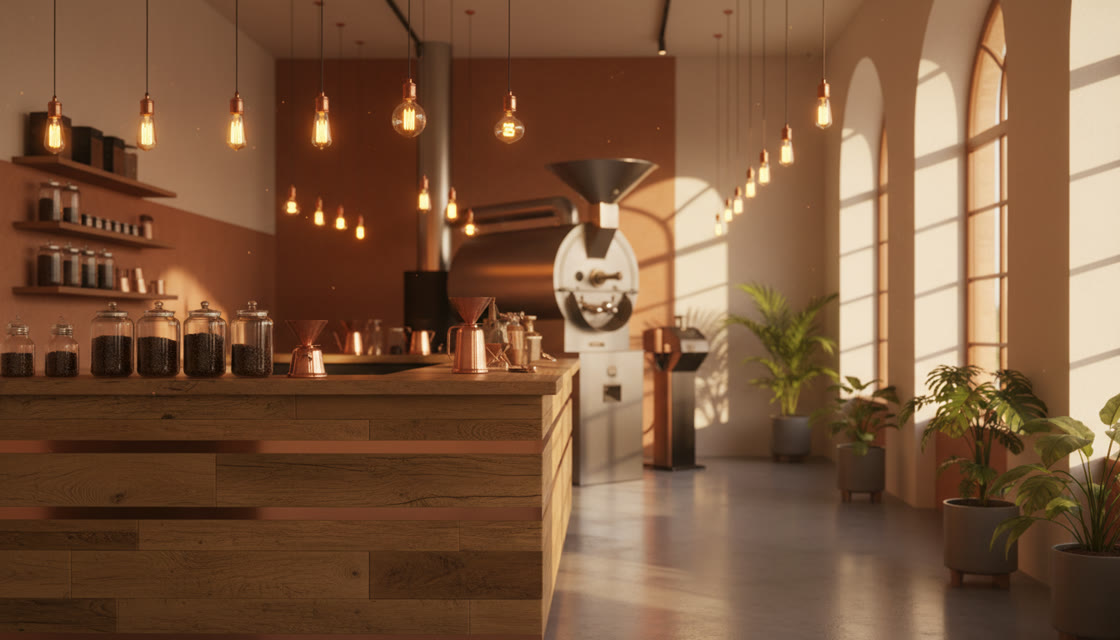
Ember & Oak is a family owned coffee shop. We serve coffee, tea, muffins and more. Come visit us today!! Click here to see our prices. We are open Mon-Sat.
Squarespace is more open than Wix and more constrained than WordPress. A redesign is very achievable within it, provided you aim at the parts of the platform that accept customisation.
Code blocks handle sections
A code block accepts HTML inline on the page, which means a generated section — a hero, a feature grid, a custom pricing layout — can be dropped in and will render as part of the page.
This is the main route in. It works well for individual sections and becomes unwieldy if you try to build an entire page out of code blocks, because you lose the platform's own editing affordances.
Custom CSS restyles what's already there
The custom CSS panel applies site-wide, so much of a redesign — type scale, colour usage, spacing rhythm, button styling — can be delivered by restyling Squarespace's existing blocks rather than replacing them.
This is often the better route: you keep the platform's editing experience and change how it looks. Extract the type and colour decisions from the generated design and apply them as CSS.
What stays fixed
Template structure and Squarespace's underlying markup aren't yours to change, so a design depending on a fundamentally different page architecture won't fit.
Check which plan you're on as well — custom code availability varies by tier, and it's better to find that out before you plan the work.
Common questions
Can I add custom HTML to Squarespace?
Yes, through code blocks, on plans that include them. They render inline on the page.
Is custom CSS enough for a redesign?
Often, yes. Type, colour, spacing and component styling are all reachable through CSS without replacing any blocks.
Will I lose my content?
No. Content lives in Squarespace independently of styling changes.
Can I change the template structure?
Only within what your template family allows. Designs requiring a different underlying architecture don't transfer.
Take the type and colour decisions from the generated design into custom CSS first — it's the highest-return, lowest-risk change.